
Resources
Welcome to the Resource Center. In this room we share our stories and reflections related to our own experiences of making places, as well as those of living in places that are worth remembering and passing on as good lessons for the future. We are now able to share course lectures with you as well.
You are most welcome to get in touch with staff if you have stories you would like to share.

God and the Architect, by Duo Dickinson
This article first appeared in The Living Church, in February 2019.

Making the Garden
It has taken me almost fifty years to understand fully that there is a necessary connection between God and architecture, and that this connection is, in part, empirically verifiable…
This article first appeared in First Things, in February 2016. It describes Alexander’s career-long search for the meaning of architecture.
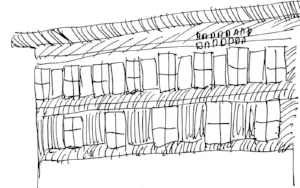
The Legacy of Christopher Alexander: Form Language, Pattern Language, and Complexity by Nikos Salingaros
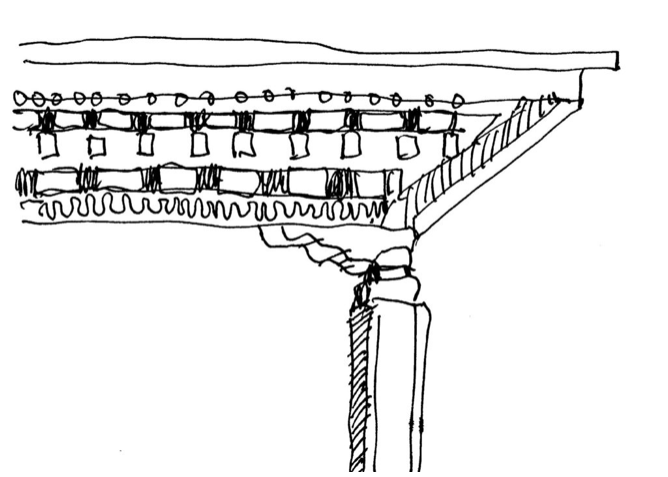
Nikos Salingaros' essay appears in Common Edge
and was adapted from a lecture given to the Building Beauty Master’s Program in April 2018.
Form Language consists of a set of definitions and vocabulary of building and design components that can be combined coherently. These comprise specific geometries, shape and size of pieces, particular materials, etc.
To most people, this is what characterizes architectural “style.” Evolved form languages always adapt to locality, culture, and use—in fact, they’re an essential part of cultural identity. Design geometry may be freely invented within those constraints. Yet, the remarkable thing is that most form languages also satisfy general geometrical constraints known as Alexander’s “15 Fundamental Properties...”
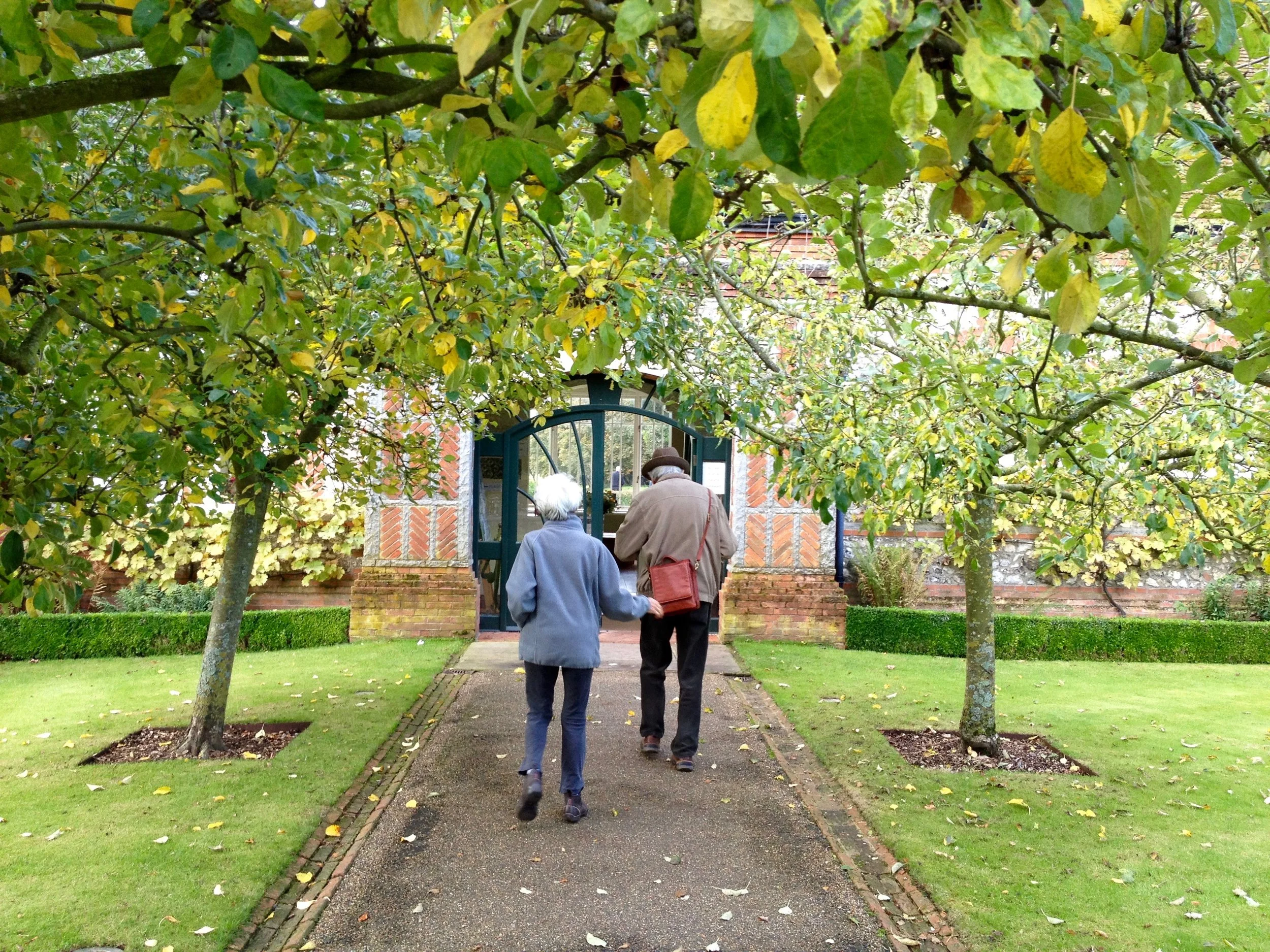
Nikos Salingaros: The Legacy of Christopher Alexander and a New Conception of the Universe
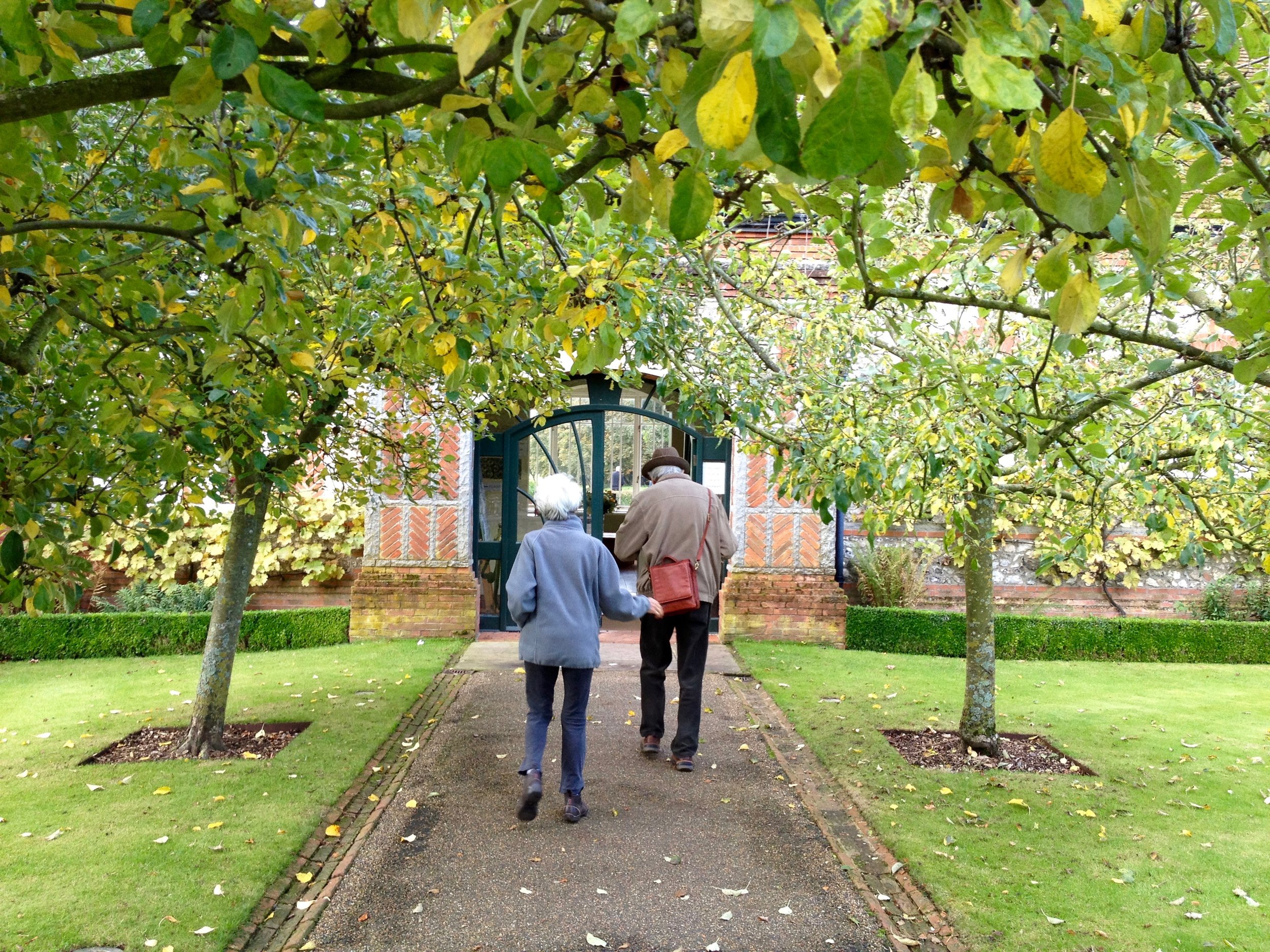
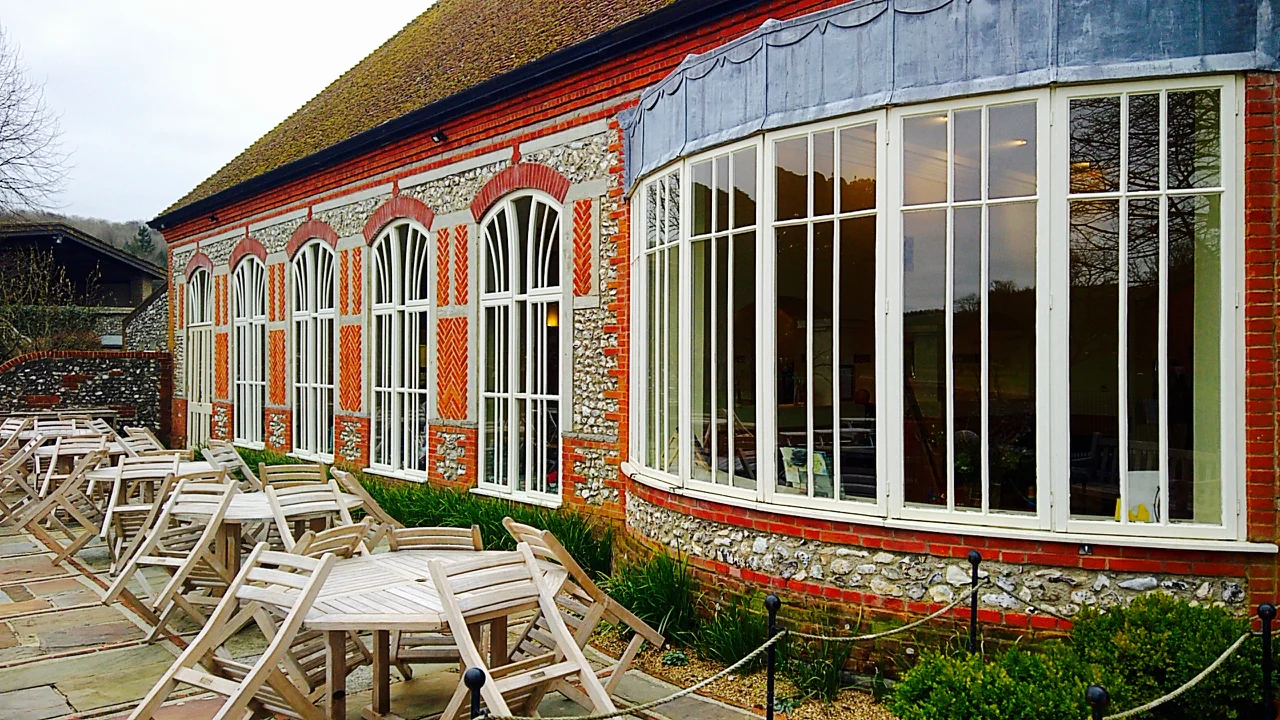
WEST DEAN COLLEGE GARDENS VISITOR'S CENTRE, West Sussex, United Kingdom
by Christopher Alexander (1994-6)
Here is Nikos Salingaros' lecture on the ideas of Christopher Alexander from the last chapters of The Luminous Ground: The Nature of Order Volume 4, given at the Building Beauty Master’s Program, on April 23, 2018. The Legacy of Christopher Alexander and a New Conception of the Universe
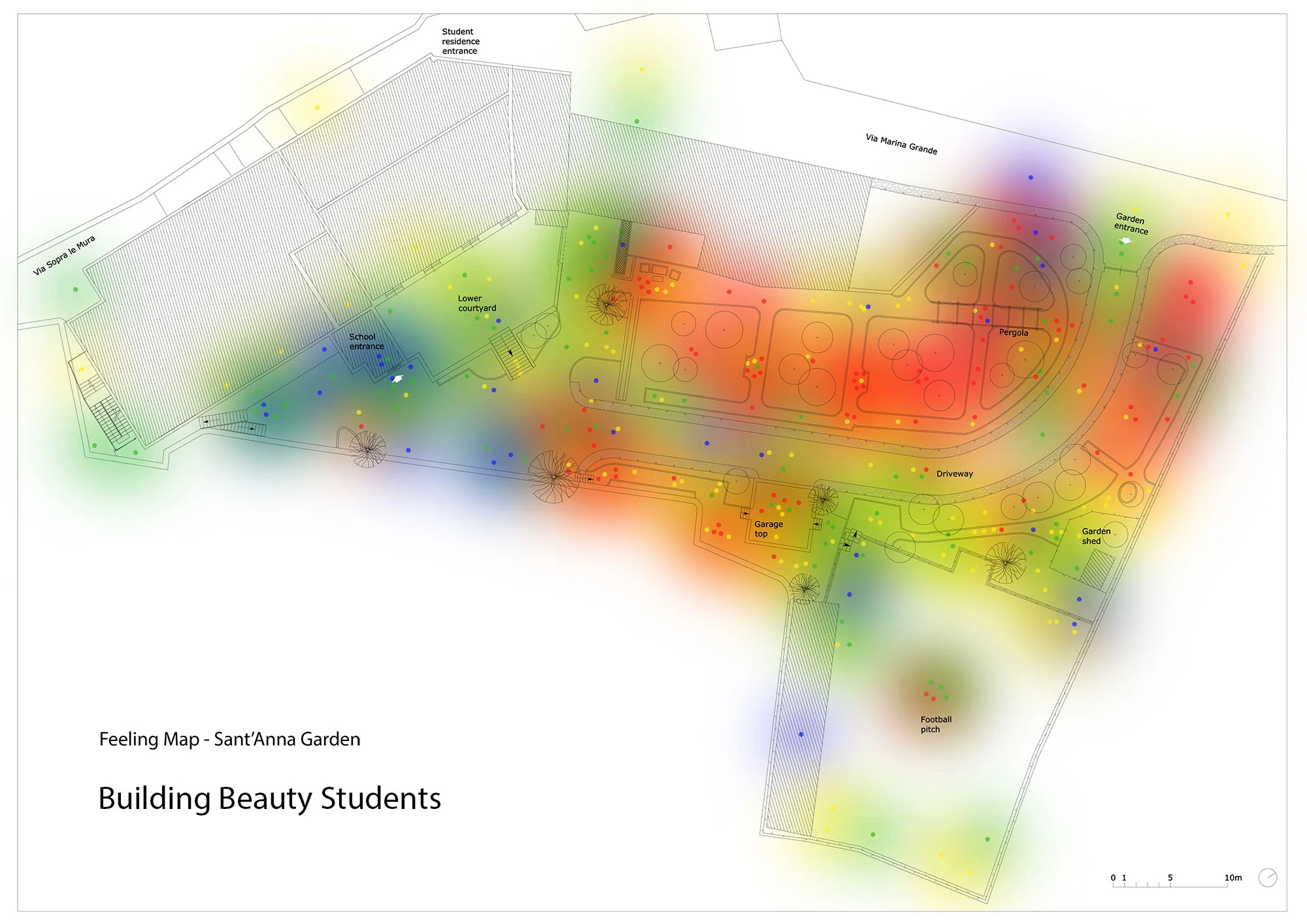
Site Analysis and Project Language Report for the Sant'Anna Institute

The Site Analysis and Project Language for the Sant’Anna Institute is our students’ summary of their work in the first term of Building Beauty. It is a significant contribution to the Institute and the learning community we are a part of. Guided by The Nature of Order and Christopher Alexander’s colleagues of many years, it is a prime example of how to prepare the ground for living architecture to be enhanced and built, extending the wholeness of community, structures, and the natural environment around them. The students have given their all to this effort, and the teaching staff congratulates them on both the high quality of their work, and the heart they have put into it. Our client, the Sant'Anna Institute, is also grateful for the contribution our students have made to the learning experience there. We have received this feedback from Director Olga Stinga.
The presence of Building Beauty at Sant'Anna has been such a pleasure for the Institute and the rest of the community. Thanks to the works being carried out in our garden by the participants of the Building Beauty, we have come to more profoundly understand the interrelatedness of beauty and practicality. Watching their design transform from an idea to a reality has been inspiring and I am happy to say that the students and their collaborators will leave a lasting mark on our Institute.
Download the 2018 Site Analysis and Project Language Report

Sorrento Gardens Form Language
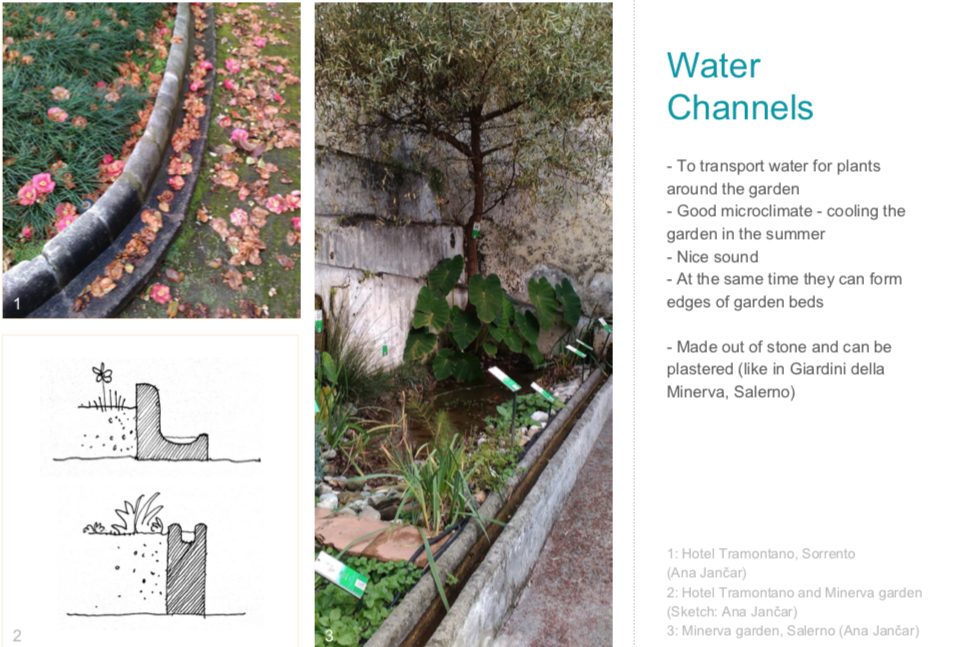
Our students and staff have created a Form Language that presents the geometrical elements and other characteristics of gardens in Sorrento and nearby towns. This Form Language will be used for as a guide for our project designs in the garden of the Sant'Anna Institute.
Nikos Salingaros: Design Patterns and Living Architecture
A promised new era of unprecedented design innovation has as its goal to generate a humane, healing environment for the user. This booklet aims to educate practicing architects, students, and the general public about design patterns, while discrediting image-based design. The pattern method establishes practical guidelines for creating life in the built environment. Design patterns are a remarkably prescient methodology that is only now finding its most profound expression. Patterns contain the seeds of a new yet timeless, adaptive approach to architecture. Design Patterns and Living Architecture by Nikos Salingaros is available online here.

Nikos Salingaros: The Patterns of Architecture

Pattern theory has not as yet transformed architectural practice—despite the acclaim for A Pattern Language, Christopher Alexander’s book, which introduced and substantiated the theory. However, it has generated a great amount of far-ranging, supportive scholarship. In this essay Nikos Salingaros expands the scope of the pattern types under consideration, and explicates some of the mathematical, scientific and humanistic justification for the pattern approach. The author also argues for the manifest superiority of the pattern approach to design over modernist and contemporary theories of the last one hundred years.
To a great extent Dr. Salingaros’s conviction rests on the process and goals of the pattern language method which have as their basis the fundamental realities of the natural world: the mathematics of nature (many that have been studied since the beginning of human history); the process of organic development; and the ideal structural environment for human activity. For Salingaros, Alexander, et al., aesthetics in Architecture derive from these principles rather than from notions of style or artistic inspiration.
Download The Patterns of Architecture-T3xture
Originally published in Lynda Burke, Randy Sovich, and Craig Purcell, Editors: T3XTURE No. 3, CreateSpace Independent Publishing Platform, 2016, pages 7-24
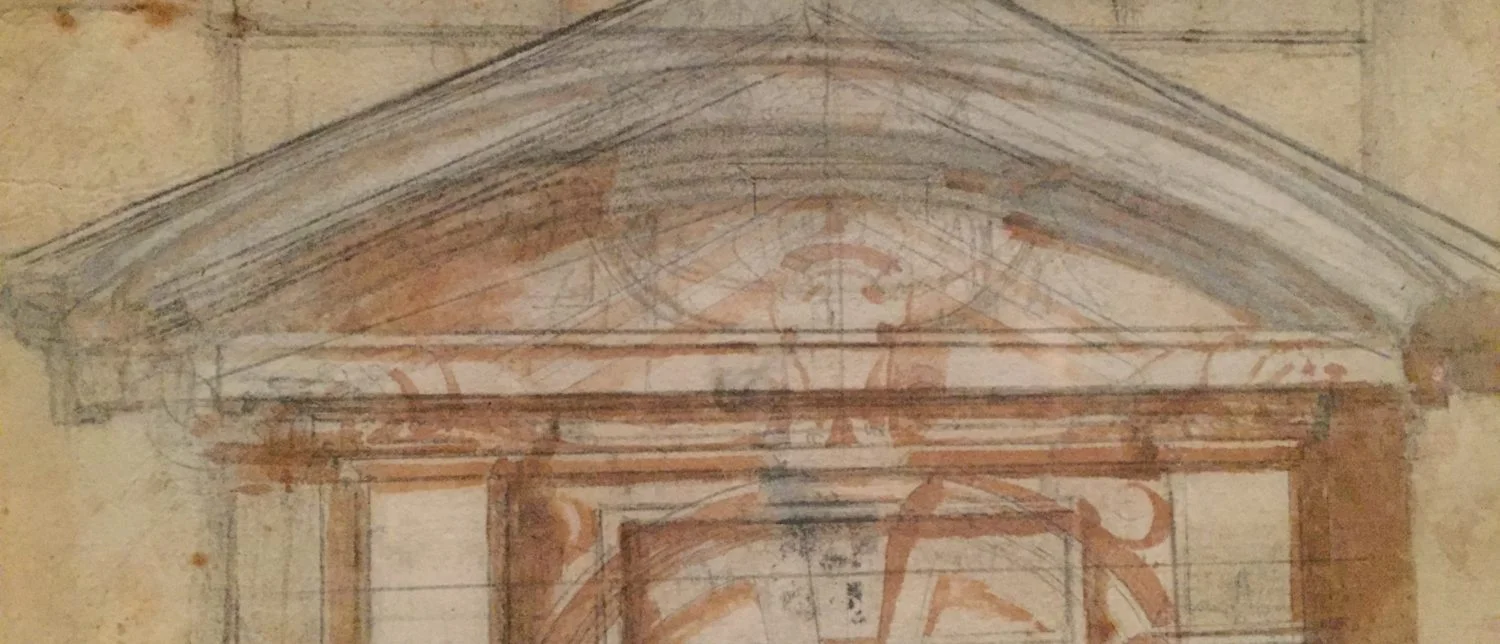
Michelangelo’s Lesson: Specialization in Architecture is Not The Only Way

Duo Dickinson shares his reactions to a recent exhibition at The Metropolitan Museum in New York, Michelangelo: Divine Draftsman & Designer.

Tiles in Architecture

From a lecture for Building Beauty by Chris Andrews
Download the slides: Tiles in Architecture: A Taste of the Tremendous Potential of Color & Ornament in Buildings (10mb PDF file)

Pattern and Project Languages

From a lecture by Chris Andrews for Building Beauty
December 21, 2017
What are patterns? What is a pattern language? How are pattern languages helpful in building projects?
Download the slides: Patterns and Project Languages (10mb PDF file)

Playing With Bits of Light

From a lecture for Building Beauty by Chris Andrews
What do classical carpets have to do with architecture?
Download the slides: Playing With Bits of Light (Interlaces and Fractals) (21mb PDF file)

The Ethical Pattern Maker
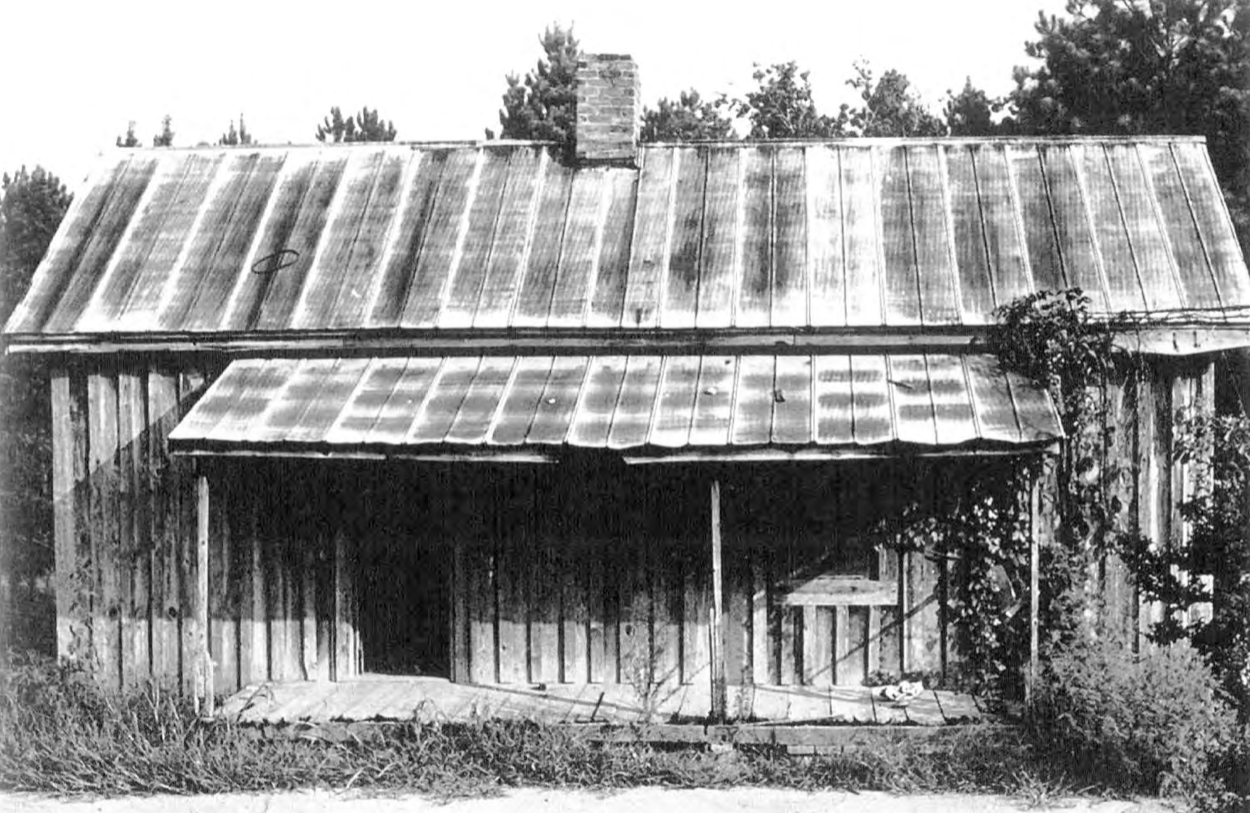
From a lecture by Chris Andrews for Building Beauty
How can we better understand and make arts and design that learn the process of craft from traditional methods, while applying innovation in a relevant contemporary context?
Download the slides: The Ethical Pattern Maker: Cultural Production & Social Transformation (10mb PDF file)
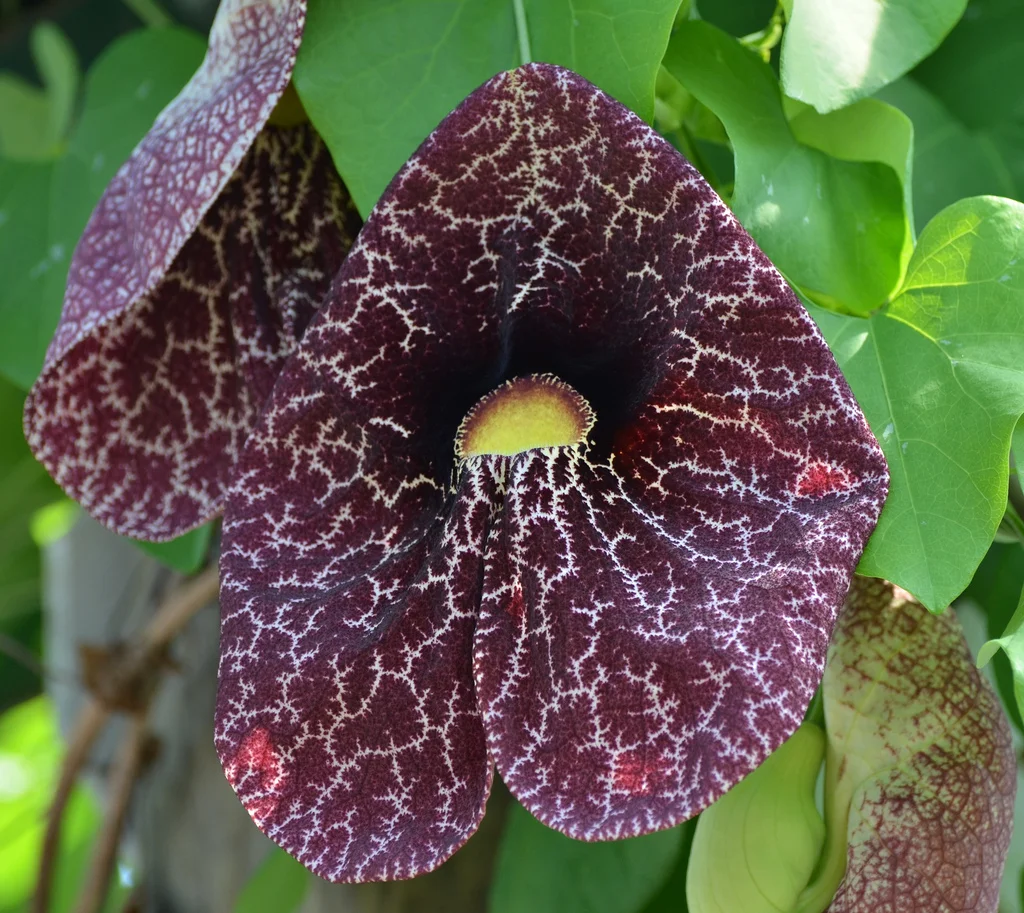
The Dutchman’s Pipe: Fifteen Geometric Properties of Wholeness


Recently, Narendra Dengle, one of our staff members here at Building Beauty, noticed a flower in the yard next door to his home. He became fascinated by it because it so clearly evidences the 15 geometric properties of wholeness that Christopher Alexander describes in The Nature of Order. After a bit of investigating, Narendra found this is an Aristolochia, or Dutchman’s Pipe. He drew some sketches to study the structure of the flower.
When considered from a Euclidean point of view, the markings are chaotic or irregular. Yet, there is profound wholeness, a natural beauty and order to it. The extent to which a configuration has life, or unity within itself, is caused by the geometrical connections among its elements, and by its relation to its immediate surroundings. These properties generate wholeness.
The fifteen properties are found everywhere in nature. They can certainly be observed in the examples of the flower below.
Strong Center. A center is a distinct physical system that has special marked coherence. Centers can be strengthened by any combination of the other properties.
Thick Boundary. A thick boundary around, or partly around, the zone occupied by a center, helps to make that center more coherent.
Levels of Scale. Centers can be embellished with smaller centers typically one-half to one-third their diameter, created within the original center, or in the space adjacent to it.
Alternating Repetition. The repetition of centers form a local array. This may happen in one, two, or three dimensions.
Local Symmetries. One or more local symmetries – smaller, symmetrical centers within the whole – strengthen the center.
Positive Space. Empty spaces within the center can enhance the center. The “positiveness” of the empty space comes from a combination of good shape, local symmetries, boundedness, and above all, the appropriateness of the space for human purposes.
Roughness. In the course of unfolding, as the different properties push and shove to make various things happen, very often something does not quite fit neatly. Adaptation is more important than Cartesian regularity.
Gradient. Gradients point toward or away from a given center – gradients of size, of contrast, spacing, or orientation.
Contrast. The coherence of a center is enhanced by contrast of color, of material, gradient, or density, which enables it to stand out more strongly from the field.
Deep Interlock and Ambiguity.This is an interface between two adjacent centers, creating a zone, usually an ambiguous zone, that forms a third center between the original two.
Echoes. Predominant angles, curves, ratios, or proportions in the shapes that have been created, give the whole system of centers a family resemblance shared by many of the centers.
Good Shape. If some rough outline of a shape has been generated, examine the overall convex pieces of the shape, and try to strengthen or emphasize those pieces to make the overall shape more distinct, more recognizable.
Inner Calm. A clean-up tool, working along the lines of Occam’s razor, it simplifies the configuration.
The Void. At the core of any center, there is always some undisturbed and perfectly peaceful area.
Not Separateness. The purpose is to overcome any separation that is caused between the configuration and its environment, or between any individual center and its immediate environment.

Think about these for a while, then take a walk in a park, or a beautiful landscape, you will see the properties everywhere. When first thinking about working with them, it is tempting to see these qualities as elements, or ingredients to be assembled and combined in a work. But of course, this raises the crucial distinction between mechanism and organism. A flower is not assembled. It grows. If we are to achieve beauty on the level of a simple flower, assembly is an obstacle rather than an aid, and this runs counter to many deeply engrained preconceptions.
The most daunting, yet exciting prospect that these observations present, is that, in order to use these qualities to their full potential, we step beyond the mechanistic worldview that has been so pervasive for the past 500 years and seek to understand their significance in our potential to make wholeness.

How To Build an Earthquake-Proof Structure

How To Build An Earthquake-Proof Structure from Building Beauty on Vimeo.
A three-minute video explaining traditional, earthquake-proof structural design techniques utilized in the Forbidden City in China.

Creative Process
Knowing that our devastated civilization cannot be repaired in a hurry, we may assume it can be rebuilt and reaffirmed only if we go very deep into the foundations of this new potential civilization. That requires, as underpinning, a renewed physical world, together with a new way of building and looking after land…

This picture is of the Eishin construction site -- the Great Hall and the Main Gate. It demonstrates using stakes, poles, and ropes, to mark the position of the entrance street, all the time judging the shape and position of the space of the entrance street as it was developing. The creation process [described in this book] presents us with a disarming and powerful potential. Using the comprehensive paradigm of conceptual tools and stepwise actions, and taking the great care that has been described, it is within our power to recover the deeper aspects of human nature and work our way toward a compassionate and ethical civilization. It is possible to recover ourselves, our world, and a future for our children and their children – one that is rooted in profound and lasting values.
Knowing that our devastated civilization cannot be repaired in a hurry, we may assume it can be rebuilt and reaffirmed only if we go very deep into the foundations of this new potential civilization. That requires, as underpinning, a renewed physical world, together with a new way of building and looking after land.
We can begin now. We can lay out a new way of thinking which is, perhaps, deep enough to give us the stepping stones we need to replace the disastrous errors we made during the last century.
If we have sufficient courage, we can make a difference in our lifetimes. In a couple of hundred years we may have recovered ourselves, our wits, our common sense, together with a newly inspired framework, giving us back real architecture as the locus of our new life and our recovery.
The Battle for the Life and Beauty of the Earth: A Struggle Between Two World-Systems, Christopher Alexander, HansJoachim Neis, Maggie Moore Alexander, 2012, Oxford University Press, p. 475.
Battle for the Life and Beauty of the Earth, Alexander, Neis & Alexander (2012) page 194.
Interwoven Meanings of the Word “Feeling” In a Living Process
[T]here is always a structure latent in any given wholeness. This latent structure is the weakly held system of centers that are not quite defined yet, only partly articulated as a structure – yet which carry the inspiration of what this thing might be, where it might go. Every wholeness carries within it this “vector” in time, pointing in some direction, and indicating where it might go…

Since the word “feeling” has several different interwoven meanings in relation to a living process, I shall recapitulate the different ways that feeling and living process are connected.
1. I am talking about feeling as a way of grasping the wholeness of a situation. We grasp wholeness by feeling it, we obtain a nearly visceral feeling of the whole which puts us in touch with the whole.
2. I am also talking about a feeling of what to do next – at any given instant in the unfolding of the whole. The feeling, too, is generated in us as a feeling. We confront the whole, look at it, in the state it has reached, and we can feel where it wants to go or where it should go as its unfolding continues.
3. I am also talking about the importance of the idea that a building or any made object, when it has life, creates – generates – deep feeling in the person who encounters it. This principle that a thing, given life, has the obligation and function in the world to induce deep feeling in people – that is a third ingredient of my discussion.
4. Fourth is the fact that while making something, and when it is begun, or not yet finished, sometimes before it has begun, we carry the feeling in the form of a dimly held vision of emotional substance. We begin with a dim awareness, and we carry that dim awareness with us, as we move forward through concrete acts of structure-preserving unfolding to generate a new and vigorous whole.
5. Fifth is the fact that this feeling or vision of emotional substance comes into our minds from the whole which exists. It is the existing whole that inspires the feeling or vision of what it might become as it unfolds. This is why feeling helps us to perform structure-preserving transformations. By following the feeling, we are able to come close to the process of structure-preserving unfolding that must characterize the living process.
6. We have the fact that as artists, or as citizens, we need to be aware that any made thing – building, room, street, or ornament – has the obligation to create experience of deep feeling in us. We may think of this by saying that the thing itself has feeling when it lives.
7. Finally, there is always a structure latent in any given wholeness. This latent structure is the weakly held system of centers that are not quite defined yet, only partly articulated as a structure – yet which carry the inspiration of what this thing might be, where it might go. Every wholeness carries within it this “vector” in time, pointing in some direction, and indicating where it might go. This is the most important aspect of wholeness, and the reason we must try to “feel” the structure when attempting structure-preserving transformations, hence every step of a living process. That, too, is experienced by us as feeling.
Christopher Alexander, excerpt from The Nature of Order Book 2: The Process of Creating Life, page 373
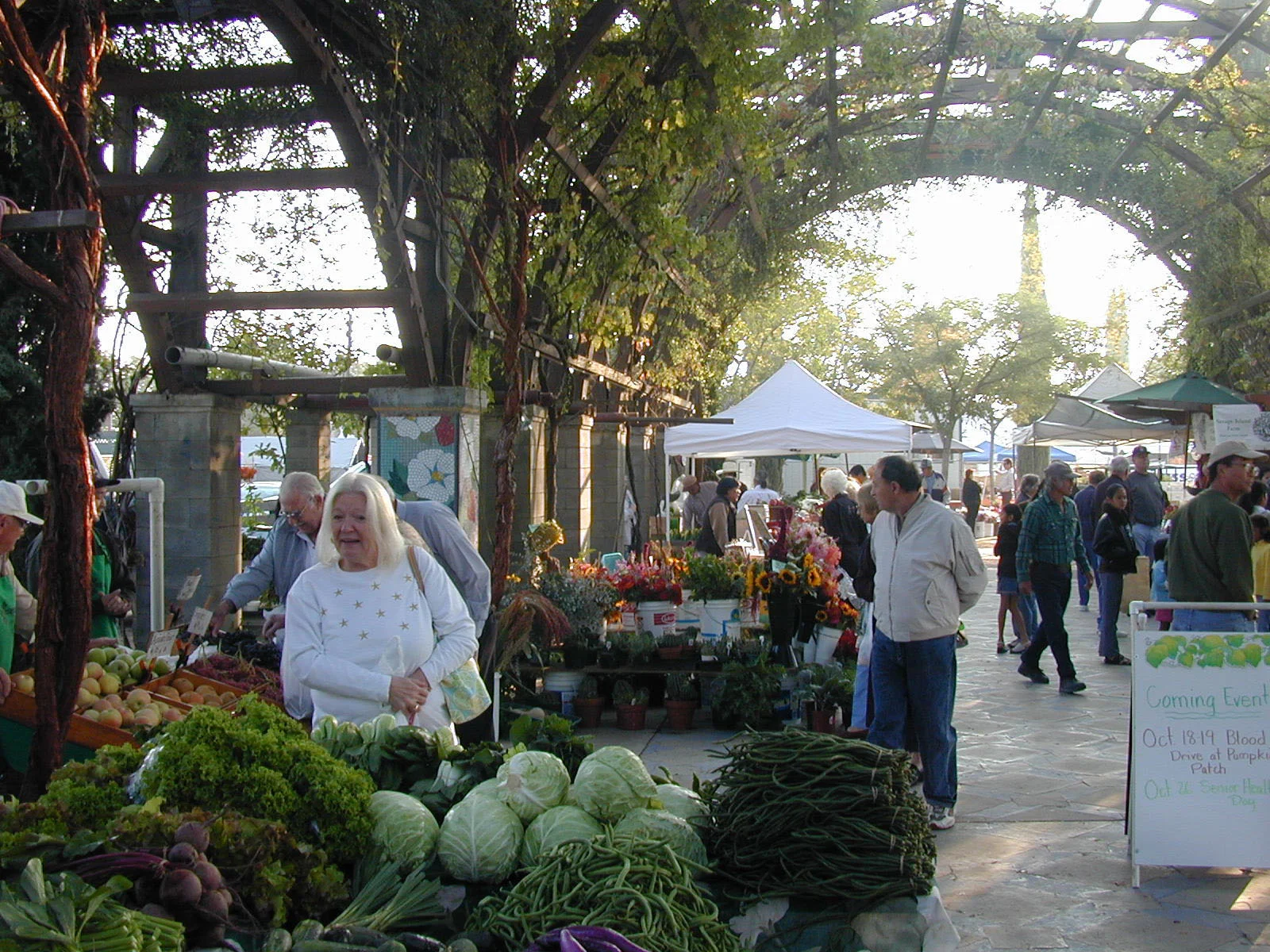
The Sense of "Belonging"
I believe process, deeply changed process, is the only real way for us to recapture our sense of belonging to the earth…

I believe process, deeply changed process, is the only real way for us to recapture our sense of belonging to the earth. In the course of the last thirty years of designing and building, and recording my failures and successes, it has seemed to me, more and more, that what governs the life in buildings – in any part of the environment – is something, some character, which can hardly at all be put there by the present-day processes which most of us in society today consider normal.
For our gardens, streets, houses, places of work, the shops where we buy, the places where we work, the cities where we meet – we may describe the best situations in all these places, when they are working well, as the situation where we – any of us, you, I, the next person – experience emotional possession of the world, where we experience “belonging.”
This belonging is a state in which the fine adaptation between people and their buildings and gardens and streets is so subtle, and goes so deeply to the ordinary core of human experience, that the people who then live and work and play in the garden or that street feel as if they are supposed to be there, as if it belongs to them, as if they are part of it, as if, like an old shoe, it is completely and fully theirs.
Of course, since we are social creatures this belonging is almost never individual or idiosyncratic. It is a state in which the world, as we create it, has this quality of seeming to belong to us collectively, It belongs to our own self, the self in which we are united with the world. It is a state in which we recognize, with joy, each gate, and field, and road, and tree; each window, and roof and nook and cranny, as a friend.
Historically, this quality has come about as a result of a long process – often lasting, sometimes even centuries. They are processes in which minute adaptations, carried out gradually, created this mutual sense of belonging, between people and their buildings.
In our present world, the opportunity for this very long time span, though it was needed in history to create such a sense of belonging, is simply not available. We live in a time where things move very quickly; where society evolves at very great speed; where people are highly mobile; where everything can change, daily faster than an eyeblink. Whatever process is needed to create this sense of belonging in our time must therefore be something entirely new. The historical forms of process, which created belongingness in historical society, will not do for us, and we must work to invent new kinds of process which may do it, again, in a new form and by entirely different means.
The problem is aggravated for architecture, too, by the fact that those social processes which now exist, our familiar processes of design, building, bidding, construction, financing, have all reached a state where they work together to produce an environment in which this lost state of belonging quite conspicuously does not occur.
It is this problem, above all, which is responsible for the callous, mercenary, and indifferent environment which we experience around us most of the time.
And it is this problem, which, slowly, my colleagues and I hope that we can begin to solve, together with all of you, during the next years, by offering entirely new kinds of processes that can begin to help us repair the living thing.
Christopher Alexander patternlanguage.com website, 2001
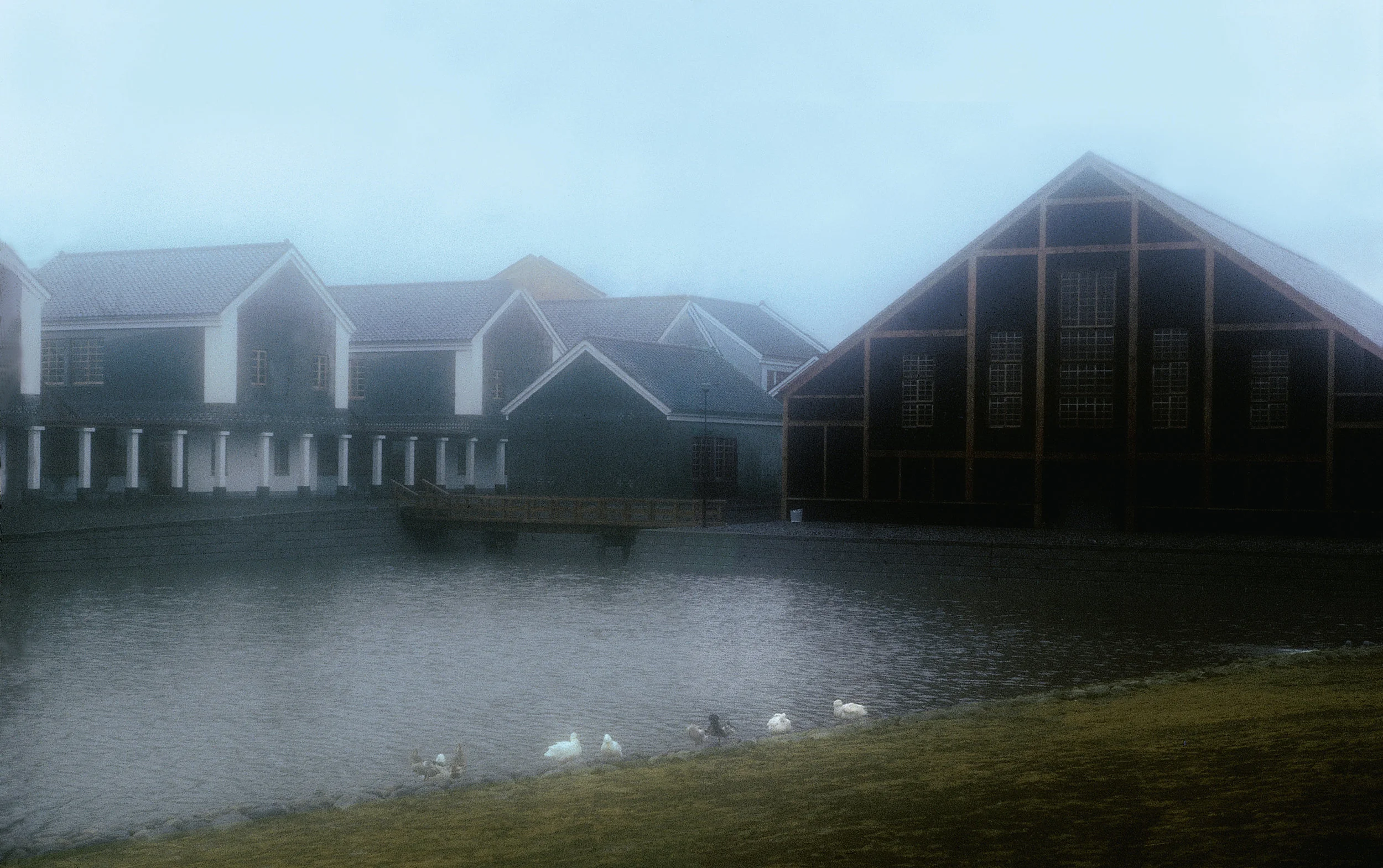
The Geometry of Living Reality and Beauty
What, then, is this whole that has arisen from the buildings we have built, working together with the students and teachers and visitors who come there, working with craftspeople, walking in silent pleasure, and taking in the atmosphere? It enlarges them all…

What, then, is this whole that has arisen from the buildings we have built, working together with the students and teachers and visitors who come there, working with craftspeople, walking in silent pleasure, and taking in the atmosphere? It enlarges them all. And why does it enlarge them? Why does it deepen their experience? It happens because the structure of the place forms strands, connections, interlocking elements, human connections too, and the matter which also comes through the soul, from the mind, and from the poetic substance which exists there.
When a state of wholeness is reached, we almost inevitably embrace the structure of the actual place. And it embraces us. The elements, centers, and properties are part of that embrace. The wholeness consists of a multistranded chain of interlocking properties and interlocking elements, forming one whole, and being nourished by that one whole. The place has something positive to give, and it nourishes people to be there. And the place has the power to help create life within the people themselves, and their interactions with one another.
Christopher Alexander
1. Photo: Eishin School, Japan. Words: from pages 412-413 of Battle for the Life and Beauty of The Earth: A struggle between two world-systems, Alexander, C., Neis, H., & Alexander, M. M. (2012). New York: Oxford University Press.
The Bavra Story
In 1961, at the age of 24, I lived in a village in Gujarat, India, for seven months. While I was living there, I felt I must be useful and after discussing with the villagers, we decided that a school would help them most…
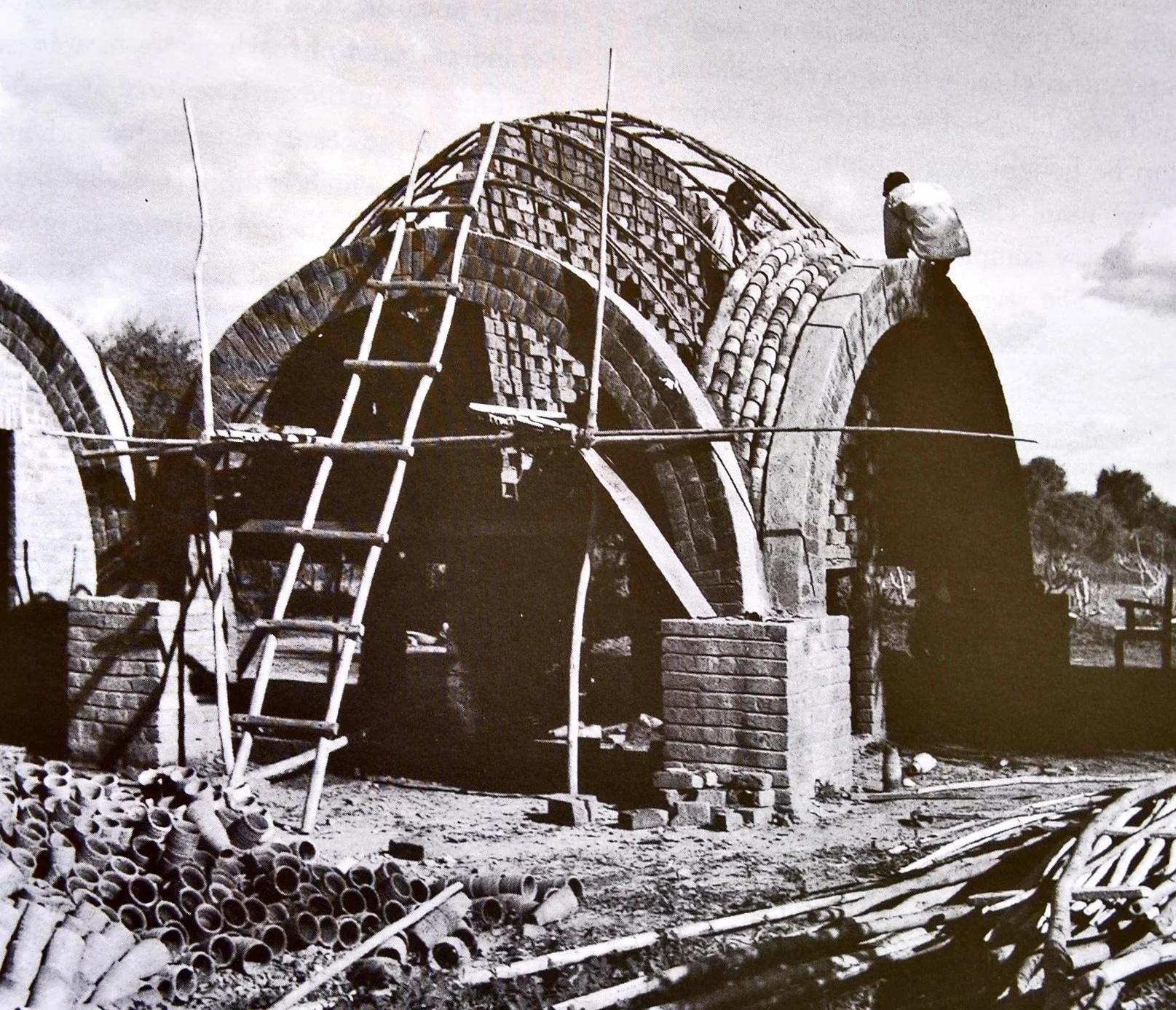
Alexander’s first building demonstrated his quest for simple beauty in the village of Bavra, in India, where he lived after completing his Ph.D. in Architecture at Harvard. Excerpt from The Nature of Order: A Vision of a Living World, Book 3, pages 526-7.
In 1961, at the age of 24, I lived in a village in Gujarat, India, for seven months. While I was living there, I felt I must be useful and after discussing with the villagers, we decided that a school would help them most. The four-room building is very basic. I did nothing except to try and make something useful that had a feeling like the village. This was my start in architecture. It was the first building I ever made and the first time I invented anything in construction. I had 5000 rupees (less than 1000 dollars) to build the school. Couldn’t import materials. No wood to speak of available. The village was five miles from the nearest road. What to do?
I asked the village potter what he could do. He showed me something he was used to making in the course of making roof tiles, a thing called a “guna” tile – a hollow truncated cylindrical tile with one end smaller than the other, about 16 inches long with a six-inch diameter at the base and a four-inch diameter at the top. In the normal course of events, it was split in two, down the middle, to form two roof tiles.
This fit perfectly into the situation. Mud and clay were abundant. There was virtually no wood available but small sticks and twigs sufficient for firing a rudimentary kiln were available in the scrubland around the village. I asked Shankarial, the potter, to make 3000 of these conical tiles for me just using mud from the village and then baking them but leaving them as cones, not splitting them down the middle.
Then I made the domes for the village school like this. Each dome had four brick arches on its four sides. Now imagine riffling these stacked tiles like a deck of cards, to get a curve. That is how we made the near-spherical vault. We laid one row of these next to the brick arch. Then the next one on the front row of tiles, and the next row on those. Because of the other brick arch, the riffled tiles rose higher and higher as they followed the curve. In those places where there was too much pressure, we filled them with earth so they didn’t crack under their own weight.
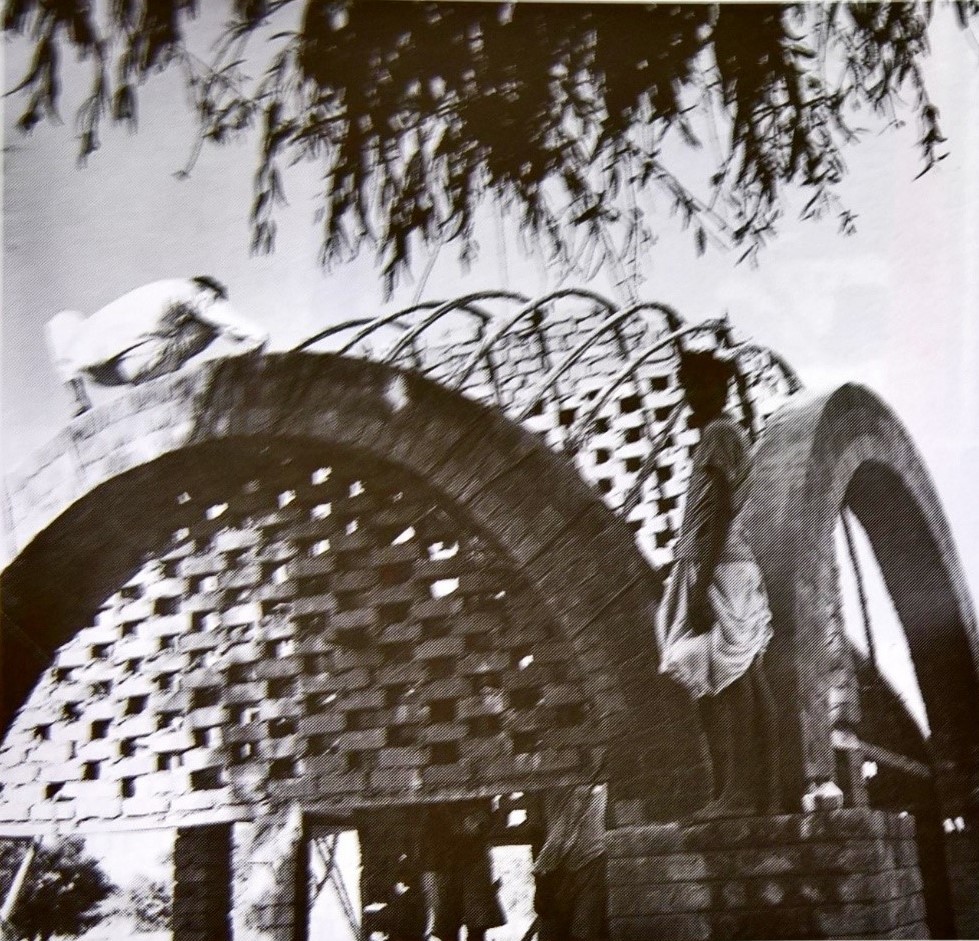
The formwork
Finally we plastered the whole thing. And, to make a tension tie that would resist outward thrust in the dome, I used cotton-bailing strap – a thin tensile steel strap used for tying up cotton bales and something we could get for nothing in the cotton-producing fields. Then plaster over the cotton-bailing strap. That was all.
Even then, at the very beginning of my life as an architect, I knew instinctively that to build a building, one has to invent ways of making. And, throughout my life I have always tried to invent ways of building which could easily, cheaply, make life and living centers in building forms. This was one of the first things I ever invented.
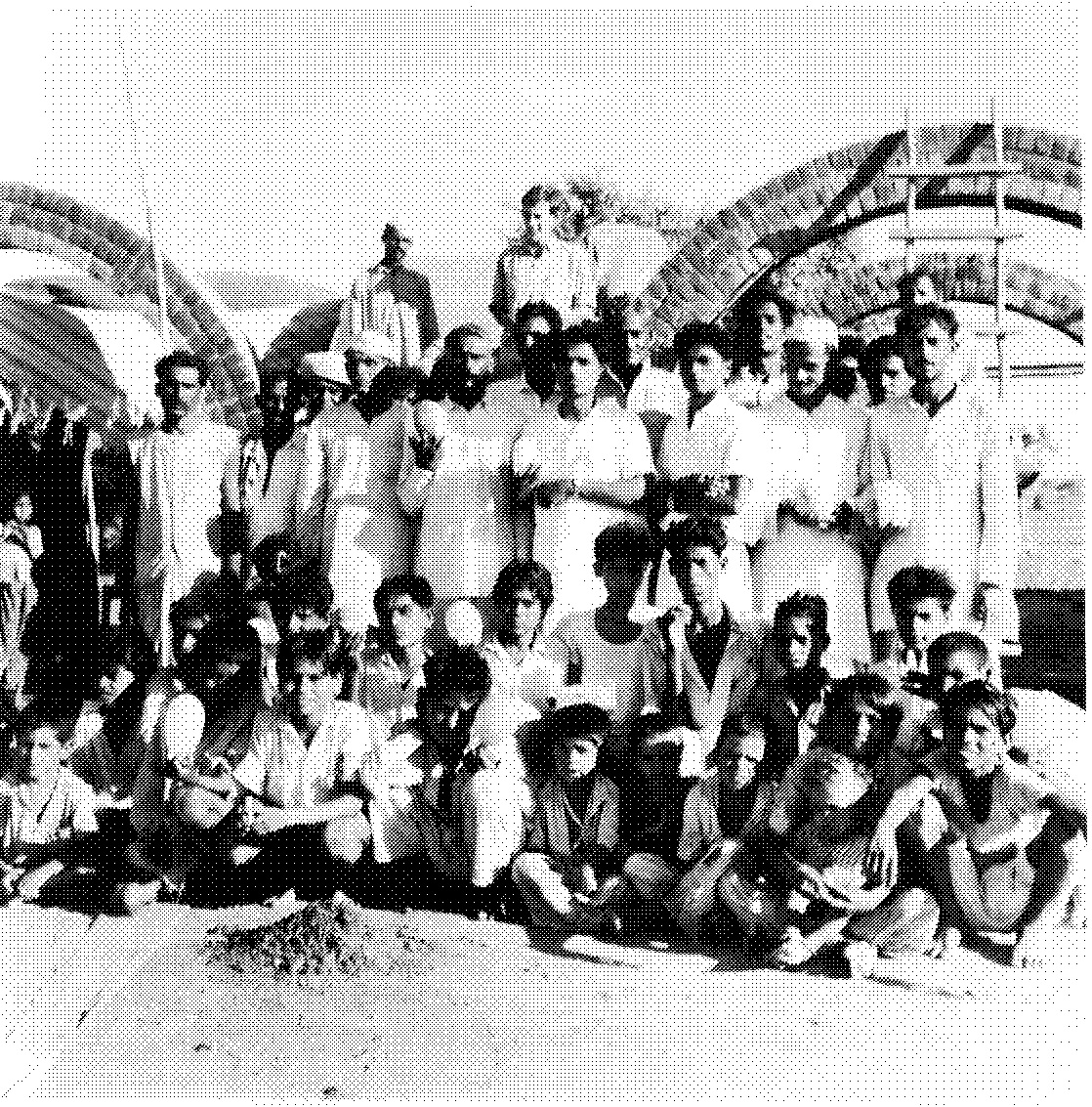
The Bavra Community
At least forty or fifty people from the village helped to build this building.
Christopher Alexander
More information about this project can be found in the Christopher Alexander & Center for Environmental Structure Archive.
You can download a report we have in the Archive here: https://christopher-alexander-ces-archive.org/report/village-school-in-bavra-elementary-school-bavra-india/.
There is also a much longer (82 pages) master plan downloadable here: https://christopher-alexander-ces-archive.org/report/master-plan-for-village-of-bavra-village-for-gujarat-india/.
