

Paolo Robazza

Architect, coordinator of the Beyond Architecture Group, he is expert in sustainable architecture and experimental construction techniques with natural materials. He has international experience in urban regeneration through strategies of participation and self-build.
Sandra Pierpaoli
Psychologist and Psychotherapist, specialist in Bio-energy and Drama-therapy, Art-Therapist Trainer (Siaf registered), she leads ScuoLAReTÉ, an educational program of Arts and Expressive Therapies of APS Il Boschetto di Pan. She is founding partner of APS Il Boschetto di Pan, for which she realized many educational and therapeutic projects. She has conducted for many years laboratories of Integrated Drama and Art Therapy for disabled young persons and young persons with relational disorders at the ASL RM/C and the AVASS Cooperative. Since 1999 she delivers private clinical activities in Rome with adults, adolescents, couples and groups. She is teacher of Bio-energetic Analysis and Integrated Drama Therapy, and Clinical Supervisor of students in education.
Emanuele Strano

Emanuele is a post-doc researcher based at MIT and DLR. He aims to understand drivers and consequences of cities and global urbanization. He mixes urban theories, complex networks and remote sensing to map, model and study patterns of urbanization across the globe. As an architect by background, he is also interested in urbanism and urban planning. He publishes several articles on such topics.
Seth Wachtel

Seth Wachtel is Dept. Chair of Art + Architecture at the University of San Francisco in California. He worked many years with Christopher Alexander and the Center for Environmental Structure during the height of their design/build period. Since 2004, he has guided USF’s Architecture program, focusing on learning through real projects for underserved communities worldwide. The curriculum has students designing culturally-connected environments using innovative construction techniques, to produce heritage preserving, locally appropriate buildings. He has received awards for teaching, service and research, and has ongoing projects in numerous countries, including a National Endowment for the Humanities grant, Discovery and Documentation of At-Risk Built Heritage.
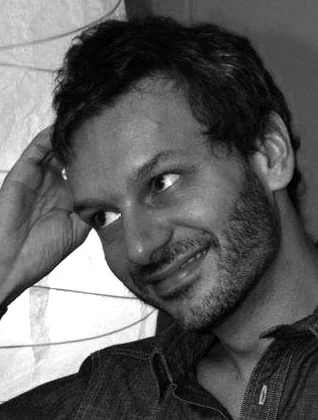
Eugenio Morello
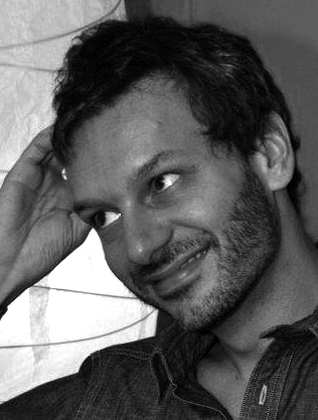
An architect by education, Eugenio Morello is Assistant Professor in Urban Design at POLIMI since 2010. He is also research scientist at the Laboratorio di Simulazione Urbana Fausto Curti , DAStU. His research interest is urban environmental quality and urban morphology. He works in particular with digital simulations and prediction models for the integration of environmental aspects and energy systems within the design of sustainable neighborhoods. He was previously a Roberto Rocca postdoctoral fellow at the Human Space Lab, POLIMI (2009) and at the SENSEable City Lab, MIT (2008). He was also adjunct professor at POLIMI since 2006, where he taught urban design. He holds a Ph.D. in environmental design and building technology from POLIMI (2006).
http://www.labsimurb.polimi.it
Facebook: @energyandurbanplanning
Facebook: @labsimurb
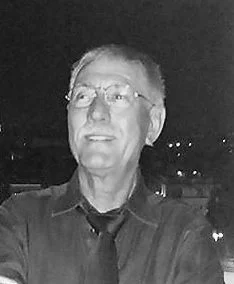
Tonino Aspergo
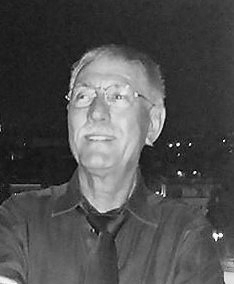
Advanced Professional Counsellor, Group facilitator, qualified at the SIB (Italian Bio-systemic Society) of Rome, member of REICO (Professional Counseling Association). Expert of Artistic Craftsmanship, he achieved the Quality Mark of the Province of Rome for Museum Merchandising, and exhibited his production of objects at the Etruscus Museum of Valle Giulia, Castel Sant’Angelo, the Casina delle Civette in Villa Torlonia, as part of the events for the Artistic craftsmanship dissemination organized by the Province of Rome. Creator and tutor of Artistic Educational Craftsmanship courses, founder and President of APS Il Boschetto di Pan, he works on the dissemination, promotional and educational aspects of Art Therapies and social projects.
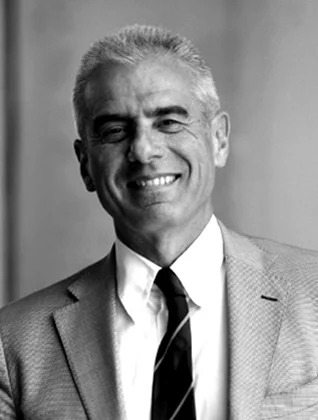
Alessandro Balducci

Alessandro Balducci, Ms in Architecture and PhD in Urban and Regional Planning. Is Full professor of Planning and Urban Policies at the Politecnico di Milano and president of Urban@it, the National Center for Urban Policies Studies. Has been Deputy Mayor for Urban Planning of the City of Milan, senior Vice Rector of Politecnico di Milano, head of the Department of Architecture and Planning of the same university, director of the PhD program in Spatial Planning and Urban Development, President of the Association of the European Schools of Planning, founding member of the European Urban Research Association, and chair of the Italian Society of Urbanists (SIU). Director of many national and European research projects on urban innovation, is author or editor of 17 books and of numerous articles and essays in Italian and English on urban planning and urban policies topics.
Twitter: @SandroBalducci
Alessandro Giuliani

Dr. Alessandro Giuliani is involved in the generation and testing of soft physical and statistical models for life sciences. He puts a special emphasis on the elucidation of mesoscopic complex systems like protein sequence/structure prediction, complex network approaches, Systems Biology. He serves as senior scientist at Environment and Health Department of Istituto Superiore di Sanitù (Italian NIH) since 1997. He is part of the Faculty of Research Doctorate in Biophysics at ‘La Sapienza University’ of Roma.
He is the author of 280 publications on peer-review journals with an H-index = 38.
Silvana Ceresa

Qualified in philosophy and successively in psychology, psychotherapist, Jungian analyst, management consultant, philosophic counsellor, works both in private clinical counselling and in business organization management in Italy and the French-speaking world; leads supervisor groups of different types; senior partner and board member of Ariele, founding partner of Sicof, member of Arpa-Jung, member of IAAP (International Association for Analytical Psychology) and IAGP (/International Association Group Psychotherapy), vice-president and founding partner of Gajap (Groups Analytical association for intercultural research on Jungian Psychology, Psychodrama), speaker at Schools of specialization and psychology at the UPS University II Level Master in Philosophic Counselling (until 2012).
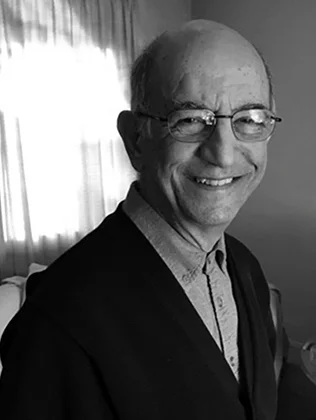
Besim S. Hakim
Besim S. Hakim, FAICP, AIA, professional studies were completed at Liverpool University and the Architectural Association in the UK and at the Graduate School of Design at Harvard. Our interview with him is posted here. His ongoing research is on rule systems and customary laws in traditional architecture within the unique contexts of the Cyclades islands in Greece, Spain, Italy and Northern Nigeria coupled with his previous findings from North Africa and the Middle East will, accumulatively, provide a fertile base of insight in how quality was achieved in the built environment of numerous geographic/cultural contexts. He has explored the possibilities of transferring the lessons to the contemporary context: particularly in the areas of management, decision-making structures and code formulations for town planning purposes. The ultimate goal is the creation of the necessary legislative and technical mechanisms that would ensure the achievement of high quality in the built environment of contemporary towns and suburbs, as well as the revitalization of historic and heritage districts.
Professor Hakim’s publications (books, articles and technical reports) cover the following areas of inquiry: Architectural Pedagogy, Culture and Built Form, and Urban Design/Planning. He has published a book titled Arabic-Islamic Cities: Building and Planning Principles, Kegan Paul International, London 1986, addressing the factors that shaped traditional cities in North Africa, with particular emphasis in identifying the underlying rules and customary practices. The book received excellent reviews and was awarded a Citation for Research by Progressive Architecture in 1987. It was translated to Japanese and published in Tokyo in late 1990. A Farsi translation was published in Tehran in 2002, and an Arabic translation was published in Cairo in 2015. The book has had wide influence on recent research and related publications, and on numerous PhD dissertations. His latest book published by Springer in September 2014, is titled Mediterranean Urbanism: Historic Urban/Building Rules and Processes, covers Greece, Italy, and Spain and a resume of the book is available at Springer.com.
Professor Hakim has also published extensively in professional and scholarly-refereed journals, and was responsible for planning projects, which were adopted by the respective local governments in Halifax, N.S. and Albuquerque, NM. His biography is published in Who’s Who in the World and Who’s Who in America. Some of his work can be viewed and downloaded from: historiccitiesrules.com.
Video: Lecture at ISB Summer School by Besim Hakim


Nabeel Hamdi
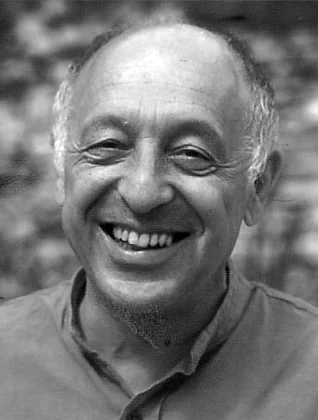
Nabeel Hamdi qualified at the Architectural Association in London 1968. He worked for the Greater London Council between 1969 and 1978, where his award-winning housing projects established his reputation in participatory design and planning. From 1981 to 1990 he was Associate Professor of Housing at the Massachusetts Institute of Technology (MIT), where he was awarded a Ford International Career Development Professorship.
In 1997 Nabeel won the UN-Habitat Scroll of Honour for his work on Community Action Planning. He founded the Masters Course in Development Practice at Oxford Brookes University in 1992, which was awarded the Queen’s Anniversary Prize for Higher and Further Education in 2001. He was awarded an Honorary Doctorate from the University of Pretoria, South Africa in 2008. He was ARUP Fellow at the University of Cape Town, Adjunct Professor at the National University of Technology, Trondheim Norway and recently visiting professor at the Graduate School of Design, Harvard University. He is currently Professor Emeritus at Oxford Brookes University.
Nabeel has consulted on housing, participatory action planning and upgrading of slums in cities to all major international development agencies, and to charities and NGOs worldwide. He is the author of The Spacemakers Guide to Big Change (Earthscan from Routledge 2014), The Placemakers Guide to Building Community (Earthscan 2010), Small Change (Earthscan, 2004), Housing Without Houses (IT Publications, 1995), co-author of Making Micro Plans (IT Publications 1988) and Action Planning for Cities (John Wiley and Sons, 1997), and editor of the collected volumes Educating for Real (IT Publications 1996) and Urban Futures (IT Publications 2005).
Video: Interview with Nabeel Hamdi

Bin Jiang

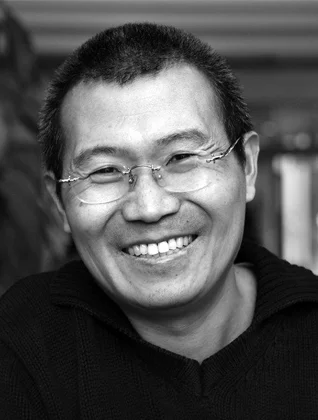
Dr. Bin Jiang is Professor at The Hong Kong University of Science and Technology (Guangzhou), where he serves as Professor of Urban Informatics in the Social Hub. He is also the Founding Director of LivableCityLAB and Acting Master of Residential College 1. His research focuses on geospatial analysis, urban science, and people-centered urban governance, with particular emphasis on topological analysis, scaling hierarchy, and living structure. He is the developer of Axwoman and the inventor of head/tail breaks, widely used methods for analyzing urban and geospatial big data. Inspired by Christopher Alexander, he pioneered quantitative models of structural beauty, including the L score, and Beautimeter, and advances a Living Structure + AI paradigm for human-centered urban design and governance.
Stefano Candellieri
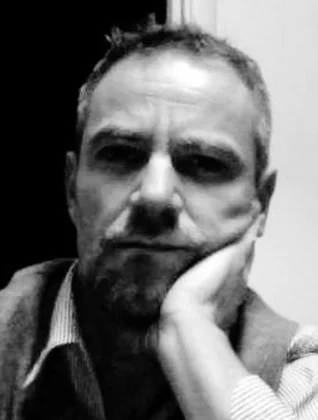
From 1991 to 2001 worked at the Local Psychiatric Services and the “Fatebenefratelli” Psychiatric Hospital of San Maurizio Canavese in Turin, where he held the role of Head Physician Assistant dealing with psychotic diseases, severe personality disorders and forensic psychiatry. Since 2001 he fully dedicates himself to private counselling as psychiatrist and psychotherapist. In partnership with psychologist and psychotherapist Davide Favero, he is founder of the Psychological Medical Center of Turin. He publishes scholarly articles on specialist journals. His current research sits at the interface between psychoanalysis (with special reference to Antonino Ferro’s models) and semiotics.

Camilo Boano

Camillo Boano, PhD, is an architect, urbanist and educator. He is Senior Lecturer at The Bartlett Development Planning Unit, University College of London (UCL), where he directs the MSc in Building and Urban Design in Development. He is also co-director of the UCL Urban Laboratory. Camillo has over 20 years of experiences in research, design consultancies and development work in South America, Middle East, Eastern Europe and South East Asia. His research interests revolve around the encounters between critical theory, radical philosophy with urban and architectural design processes, especially those emerging in informal and contested urbanisms.
Vito Latora

Vito studies the structure and the dynamics of complex systems using his background as theoretical physicist and some of the methods proper to statistical physics and nonlinear dynamics to look into biological problems, to model social systems, and to find new solutions for the design of man-made networks. He is currently interested in the mathematics of multiplex networks, and is working with neuroscientists and with urban designers to understand the growth of networks as diverse as the human brain or the infrastructures of a city.
Narendra Dengle
Narendra Dengle is an architect, conservationist, educator, and writer, based in Pune, India. He was one of the founding partners of The GRÜP, New Delhi (1974-87) and is the Principal at Narendra Dengle & Associates since 1987. His practice is evolved around cultural, contextual, and aesthetic issues. His works, consisting of museums, temples, housing, tribal schools, hospitals, hotels and resorts, and educational campuses, carried out in rural and urban areas in India as well as the Sultanate of Oman, have featured in journals of architecture in India, France, South Arica, Italy, China, and the UAE. He has taught at the SPA New Delhi (1974-81), was the Chair of Design at KRVIA Mumbai (2006-11) Mumbai, the Academic Chair at Goa College of Architecture (2012-2014), the Academic Chair at the PVPCOA Pune (2015- 20), and is currently Chairman of the Advisory Board of Goa College of Architecture. He is on the faculty of the Building Beauty Program, at Sant’Anna Institute, Sorrento, Italy since 2018 and Co-Chair of its Asian Advisory Board.
Solo exhibitions of his works and drawings were held in Pune, Mumbai, and Nagpur. He is the author of the books Jharoka (Marathi), 2007, The Discovery of Architecture: a contemporary treatise on ancient values & indigenous realty co-authored with M N Ashish Ganju, 2013, Dialogues with Indian Master Architects 2015, and The Architecture in Maharashtra: Tradition & Journey (2 volumes each in Marathi and English-awaiting publication). He has made films on Architectural Appreciation.


Alastair Parvin
Alastair Parvin is a strategic designer, civic entrepreneur and the co-founder of WikiHouse Foundation. He is currently working on better housing systems, open source sustainable technology, distributed production and how the digital revolution might help us reinvent our housing economy and build more resilient, democratic cities. Although he trained in architecture, his work extends outside its traditional framework, looking at the invisible economic, social, political and industrial forces behind it. He is a co-inventor of WikiHouse, a digital building system which is using open design and distributed digital manufacturing to radically democratise the production of homes.
Twitter: @AlastairParvin
Olga Volchkova

Classically trained in painting and restoration, Olga Volchkova joined an important post-Soviet iconostasis journeyman team in the early 1990's. In her current icons, she canonizes herbs, flowers, and other plants: a secular continuation of that revival. As an avid gardener, who grew up partly in a subsistence farming village, she's a keen student of natural morphology, and the history of human-plant interaction. Her specialties include the rigorous use of processes from artisan and fine art traditions. She was the concluding subject in Christopher Alexander’s software experiment ‘Gatemaker’, which facilitates unfolding natural structure. She teaches icon painting at the Jordan Schnitzer Museum of Art at the University of Oregon.

Savyasaachi
Savyasaachi is an independent researcher and professor. He was formerly professor at the Department of Sociology where he taught for thirty years. He has been visiting faculty in the Department of Conservation Architecture, School of Planning and Architecture Delhi; the National Institute of Design, Ahmedabad, Gujarat; the National Institute of Design Bangalore 2020; and the Department of Design NIRMA University Ahmedabad. He served as a member of the senate National Institute of Design, Ahmedabad, Gujarat.
Saachi is a member of the governing body Bhoomika Creative Dance Center Delhi; the governing body of “Greha” (A society for growth of knowledge in the fields of development, habitat design and architecture Delhi); advisor to Sehreeti-Development Practices (A non-profit working with community for sustainable development, habitat design, educational and capacity building); and Vice President of Investigating Design (A non-profit that sees design as an everyday phenomenon), which uses design thinking to empower communities for a better future.
Publications: Series Editor (with Ravi Kumar as co-editor) for Social Movements and Transformative Dissent, Routledge, Delhi (three volumes published). Edited Intractable Conflicts in Contemporary India, Routledge, India. Edited Between the Sky and the Earth, a Penguin Book of Forest Writings, Penguin, India. Saachi is also the author of many articles.


Ya'ara Rosner Manor

Ya'ara Rosner Manor is an architect and urban planner with over 15 years of professional experience. She has over a decade of experience in teaching participatory planning, place making and strategic planning. She is the winner of several academic and professional grants and prizes, including the Israeli Planners' Association "Best Researcher" (2013), the President of the State of Israel Scholarship for Innovative Scientific Research (2015) and the Israel Planners' Association ‘Most influential Planners' (2021). Her professional work as well as her research is focused on informal urban structures, and especially on mediating the needs and aspirations of local communities and planning system(s).